









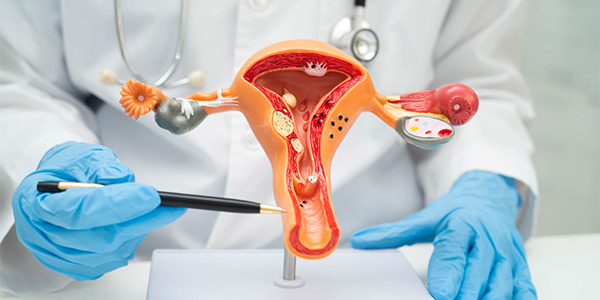
Types of Gynaecological Surgery: Laparoscopic & Open
The word "surgery" tends to conjure images far scarier than what many gynaecological surgery actually involve. Some are done through a couple of small incisions. Others need a full, open operation. It is surprising that two women can be diagnosed with the same condition yet they'll end up getting different treatments based on their severity and patient's health and past medical records.
Understanding this distinction isn't just useful trivia. It's what helps you make sense of why your gynaecologist picks one approach over another, and what your recovery is actually going to look like once it's done.
What are the Different Types of Gynecological Surgery?
Laparoscopic gynecological surgery, also known as keyhole surgery, is performed through a few small incisions in the abdomen rather than one large cut. The surgeon inserts a laparoscope, a thin tube fitted with a camera, through one incision to get a clear, magnified view of the pelvic organs. Any instruments needed for the procedure go in through the remaining small cuts.
This procedure is often used to diagnose unknown pelvic pain, infertility, and conditions such as endometriosis, fibroids, ovarian cysts, pelvic scarring or adhesions, and some reproductive cancers. Often, the condition can be diagnosed and treated during the same procedure, eliminating the need for a repeat surgery.
While laparoscopic surgery is a common minimally invasive gynae surgery, that's the overarching principal. It all comes down to using minimal access, which simply means using smaller incisions rather than that one large incision that standard surgery needs. Different types of treatment require the support of laparoscopy, vaginal surgery or robot-assisted surgery to support different procedures and different patients.
Another approach is an open surgery, called a laparotomy, which involves making a larger incision into the abdomen in order to get the surgeon an direct line of sight into the pelvic organs. It's not the most cutting edge procedure but it's far from being antiquated. Doctors may still use this procedure because it's safest in certain situations for difficult disorders, extensive adhesions, and some types of surgery like cancers.
Understanding the Different Types of Hysterectomy
A hysterectomy simply means the surgical removal of the uterus. But that one-line definition hides a lot of variation, what actually gets removed, and why, can look quite different from one patient to the next, which is why understanding the different types matters.
It's also more common than many people realise. Nationally, 3.3% of Indian women aged 15-49 had undergone a hysterectomy, though this figure shifted noticeably from one region to another, a reminder that hysterectomy isn't some rare, last-resort procedure in India.
The procedure for hysterectomies varies from woman to woman. A total hysterectomy removes both the uterus and the cervix, while a subtotal (or partial) hysterectomy takes out the main body of the uterus but leaves the cervix intact. Depending on the condition being treated, the fallopian tubes or ovaries might come out too.
How it's actually performed can also vary, through the abdomen, vaginally, or laparoscopically. That decision usually comes down to a few things: how large the uterus is, where it sits, what's being treated, and ultimately, the surgeon's own judgment on the day.
What Can You Expect During Recovery?
Recovery after gynaecological surgery isn't one-size-fits-all; it largely hinges on which procedure was done and how. Laparoscopic surgery tends to be kinder to the body: some women notice mild abdominal discomfort, bloating, fatigue, or even shoulder pain in the days after, usually from the gas used during the operation. A minor procedure might mean bouncing back within days. A more complex one, understandably, takes longer.
Open surgery asks more of the body. The incision runs deeper, and so does the healing; the abdominal wall and underlying tissue simply need more time to knit back together. An abdominal hysterectomy, for instance, typically calls for six to eight weeks of recovery, though that number is really just an average. Every woman's timeline looks a little different.
Choosing between minimally invasive and invasive gyane surgery comes down to one thing: what actually treats the condition safely and effectively. Sometimes that's the keyhole approach. Sometimes it genuinely calls for open surgery, and that's not a step backwards; it's just the more sensible option for that particular case.
Exploring gynaecological surgery options? Book a consultation with TWH's advanced surgical care specialists.
Most Popular this Month

IVF treatment in Delhi: Process, success rates & choosing the right specialist
IVF Treatment in Delhi: Process, Success Rates & Choosing the Right Specialist

Laparoscopic myomectomy: Fibroid removal surgery explained
Laparoscopic Myomectomy: Fibroid Removal Surgery Explained

Ovary surgery explained: Types, recovery & what to expect
Ovary Surgery Explained: Types, Recovery & What to Expect

Types of Pregnancy Delivery: Normal, C-Section & More
Normal, C-Section, Water Birth & More: Types of Pregnancy Delivery Methods Explained