










Ovary surgery explained: Types, recovery & what to expect
Ovary surgery is prescribed for a range of reasons, including a persistent ovarian cyst, an ovarian mass, endometriosis, or suspected ovarian cancer; the specifics of each case determine what the procedure actually involves. Patients who are advised to undergo ovarian surgery will want to know whether the entire ovary will be removed, whether fertility will be affected, and how long recovery realistically takes. Is surgery even necessary for every ovarian cyst?
The answer depends entirely on why surgery was recommended in the first place. In some cases, only the cyst is removed, with the ovary left intact. In others, part or all of the ovary needs to come out. The decision is shaped by several factors: the size and nature of the problem, the patient's overall health, and what the surgeon finds upon completion of the evaluation.
When Is Ovary Surgery Recommended?
There isn't just one reason surgery gets recommended, several situations can lead to it. One of the more common: an ovarian cyst that's grown large, hasn't gone away on its own, is causing pain, or shows something on imaging worth a closer look. In these cases, ovarian cyst removal surgery is aimed at taking out the cyst itself, while trying to leave as much healthy ovarian tissue behind as possible.
Ovarian masses, endometriosis, ovarian torsion: these come up too, though less often. Cancer is a different matter altogether and not a rare one either: in India, 47,333 new cases of ovarian cancer were reported among women in 2022, making it the third most common cancer among Indian women that year. When it's suspected, or already confirmed, ovarian cancer surgery may involve removing one ovary or both, sometimes along with nearby tissue. How much is removed comes down to staging and how far the disease has actually spread.
What Types of Ovary Surgery Are There?
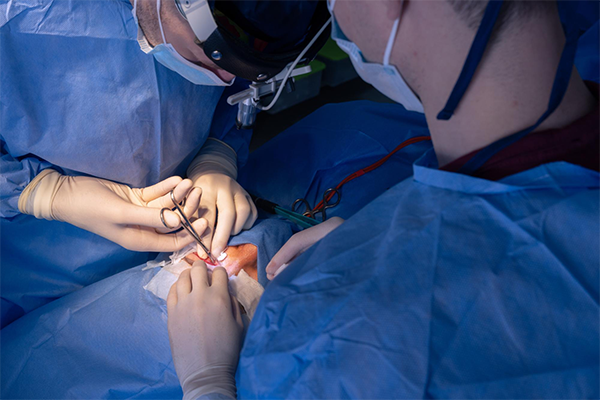
There are two main types of ovary surgeries: laparoscopic and open.
Laparoscopic ovary surgery uses small incisions in the abdomen rather than one large cut. A camera gives the surgeon a clear view of the pelvic organs, and specialised instruments handle the rest. It's a common choice for removing certain ovarian cysts, and patients generally recover faster from it than from open surgery.
Open surgery involves a larger incision and is used when the cyst or mass is unusually large, when cancer is a possibility, or when the surgeon simply needs more room to operate safely.
What actually gets removed: just the cyst, part of the ovary, or the whole organ, depends on what's found during surgery. Surgeons often try to preserve healthy tissue, particularly for patients who may want children later. But there's no fixed rule here. Each case is judged on its own.
Recovery After Ovary Surgery
Much of this comes down to two things: the type of procedure performed, and how the patient's health was going in. Laparoscopic recovery tends to be quicker; open surgery generally asks more of the body, and takes longer to bounce back from. That said, even the less invasive option leaves most patients fatigued and sore for a few days. That's normal, not a sign anything's wrong.
Bloating, some abdominal discomfort, and general tiredness tend to follow. Not everyone experiences all three, and how long they last differs from person to person. As for when it's safe to get back to exercise, driving, work, or intimacy, that's a conversation to have with the doctor directly, since it depends on how recovery is actually progressing, not a fixed timeline.
So, how to recover from ovary surgery? It largely comes down to the basics, done consistently: following discharge instructions, taking medication as prescribed, keeping the incision clean, and resting properly rather than pushing through fatigue. Short walks are usually fine once cleared by a doctor. Strenuous activity isn't, not until given the go-ahead.
Certain symptoms warrant a call to the healthcare team without delay: worsening pain, fever, heavy bleeding, redness or discharge at the incision site, persistent vomiting, or anything else that doesn't feel right.
Ovary surgery can be an unsettling prospect. But knowing why it's been recommended, and what recovery is likely to look like, tends to make it far less overwhelming. A gynaecologist can walk through the surgical approach, what will be removed, and what that might mean for fertility and long-term health before any final decision is made.
Dealing with an ovarian cyst? Book a consultation with TWH's advanced gynaecological specialists.
Most Popular this Month

IVF treatment in Delhi: Process, success rates & choosing the right specialist
IVF Treatment in Delhi: Process, Success Rates & Choosing the Right Specialist
Laparoscopic myomectomy: Fibroid removal surgery explained
Laparoscopic Myomectomy: Fibroid Removal Surgery Explained

Types of Pregnancy Delivery: Normal, C-Section & More
Normal, C-Section, Water Birth & More: Types of Pregnancy Delivery Methods Explained

Online Gynaecologist consultation: How it works & when to book one
Online Gynaecologist Consultation: How It Works & When to Book One