




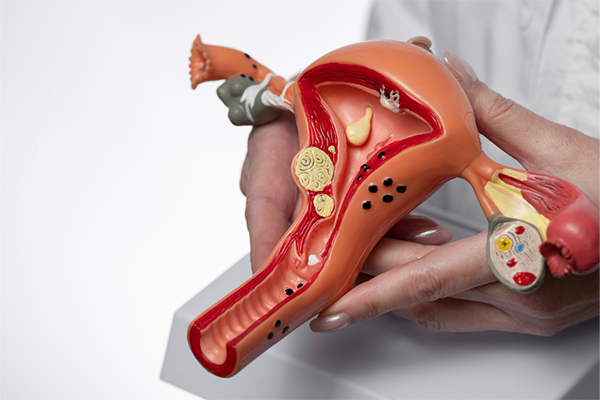
Ovarian Cancer Treatment in Delhi: Symptoms, Diagnosis & Treatment Options Explained
Ovarian cancer ranks as the third most common gynaecological cancer recorded across Indian cancer registries, and yet it's one of those conditions that can slip past early notice, its symptoms often looking like nothing more than a digestive upset or a menstrual irregularity. Ovarian cancer treatment in Delhi is shaped by several factors together: the type of cancer, its stage, the patient's overall health, and how far it has already spread.
Bloating that won't settle, discomfort in the abdomen or pelvis, feeling full almost immediately after eating, a change in urination, fatigue that doesn't have an obvious cause, none of these should be brushed aside if they persist. They're worth raising with a doctor.
Types of Ovarian Cancer
There are a total of 4 types of ovarian tumour: Epithelial Ovarian Cancer, Germ Cell Ovarian Tumours, Sex Cord-stromal Tumours, Borderline Ovarian Tumours.
Most cases begin in the epithelial cells, the tissue covering the ovary's outer surface; this is by far the most common form and tends to appear later in life, often after menopause.
A smaller share develop in the germ cells, the cells responsible for producing eggs. These occur more often in younger women, including teenagers, and respond well to treatment even when caught at a later stage. Rarer still are stromal tumours, which arise in the hormone-producing tissue of the ovary. Because they can disrupt oestrogen and progesterone levels, they sometimes announce themselves earlier, through abnormal bleeding rather than the vaguer symptoms typical of other types.
Knowing which type is involved shapes everything that follows, the diagnostic path, the treatment approach, even the extent of ovarian cancer surgery that may eventually be needed.
Symptoms of ovarian cancer
In its early stages, ovarian cancer rarely announces itself clearly. What matters is the pattern: symptoms that persist, that keep recurring, or that feel out of step with how your body usually behaves are the ones that warrant a proper look.
Some of the more common symptoms include:
● Persistent bloating or abdominal swelling
● Pelvic or abdominal pain
● Feeling full after eating very little
● A noticeable change in appetite
● Frequent or urgent urination
● Tiredness that doesn't lift
● Changes in bowel habits
None of this automatically points to cancer. These symptoms have plenty of other, far more common explanations. But when they persist beyond a few weeks, an evaluation by the Best gynae-oncologist in delhi you can access is the quickest way to get clarity.
Causes of Ovarian Cancer
There's no single, identifiable cause of ovarian cancer, what exists instead is a set of factors that raise the odds, some of them within a woman's control and most of them not. Age is one of the clearest: risk climbs after 50, particularly once menopause has passed.
Family history matters too. A close relative who's had ovarian, breast, or colorectal cancer raises the likelihood, and inherited gene changes, BRCA1 and BRCA2 among them, can push that risk higher still, alongside Lynch syndrome-linked genes.
Reproductive history plays its own role: never having carried a pregnancy, or having a first full-term pregnancy after 35, both feature in the risk profile. So does long-term hormone therapy taken after menopause, and endometriosis, which has been linked to certain ovarian cancer subtypes. Obesity and low physical activity round out the list, though their contribution is more modest than the genetic and reproductive factors.
Having one or more of these doesn't mean cancer is inevitable. It does mean a slightly closer watch on symptoms is worthwhile.
Ovarian cancer diagnosis and treatment
There's no dependable screening test yet for ovarian cancer in women who fall into the average-risk category, this is worth stating plainly, since it's often assumed otherwise. CA-125 blood tests and ultrasound scans are useful once a concern has already been raised, but neither is built to serve as a blanket screening tool.
Where ovarian cancer is suspected, a doctor might work through a pelvic examination, ultrasound, CT or MRI imaging, blood tests, and tissue sampling, which of these gets used, and in what order, depends on the individual's symptoms and initial findings.
Once the type and stage are established, treatment can be mapped out. Depending on the case, this might mean ovarian cancer surgery, chemotherapy, targeted medicines, or some combination of the three.
Surgery typically involves removing the tumour along with affected reproductive or surrounding tissue; in select early-stage cases, fertility-sparing surgery becomes an option, though that depends heavily on the cancer type, the stage at diagnosis, and the woman's own circumstances.
Chemotherapy can come before surgery or after it, depending on how the case is unfolding clinically. For some advanced presentations, more specialised techniques, heated intraperitoneal chemotherapy, for instance, may form part of a wider treatment strategy. None of these decisions should be made in isolation.
They belong with a specialist team reviewing the full diagnostic picture, ideally the same team that would go on to perform the surgery if it's needed.
How do you choose specialist care for ovarian cancer?
A search for the best doctor for ovarian cancer in delhi, or a Best gynae-oncologist in delhi, is often where this journey starts. But the search terms only get you so far; what actually matters is qualification, hands-on experience with gynaecological cancers, access to multidisciplinary support, and the diagnostic and treatment infrastructure behind the doctor.
A Gynae-oncologist hospital in delhi NCR worth considering is one where gynaecological oncology sits alongside medical oncology, radiology, pathology, surgery, and supportive care under one roof. That kind of coordination tends to keep treatment planning centred on the patient rather than fragmented across departments, and it matters just as much before a diagnosis as it does for something as involved as ovarian cancer surgery itself.
At The Women's Hospital (TWH), gynaecological oncology is built into its broader women's health services. TWH's approach reflects Clinical Excellence, backed by specialist-led care and the diagnostic and treatment services to support it, the kind of coordinated setup that separates a search result from the best doctor for ovarian cancer in delhi you can actually rely on.
Persistent bloating, pelvic discomfort, early fullness, unusual urinary changes, these can stem from any number of causes, but when they linger or feel unfamiliar, they're worth a medical opinion. Ovarian cancer treatment in Delhi may draw on surgery, chemotherapy, targeted treatment, or a mix of these, shaped entirely around the individual's diagnosis and stage.
Whatever the path, having it planned and delivered at one well-equipped Gynae-oncologist hospital in delhi NCR is often what makes the difference between a fragmented experience and a coordinated one.
Most Popular this Month

Preconception Health: What Couples Should Check Before Trying for a Baby
Preconception Health: What Couples Should Check Before Trying for a Baby
Hysteroscopy Explained: Procedure, Benefits & Recovery Time
Hysteroscopy Explained: Procedure, Benefits & Recovery Time
The Complete Health Check-Up Checklist for Women by Age
The Complete Health Check-Up Checklist for Women by Age
Why Women Need Preventive Health Checkups, Even When They Feel Healthy
Why Women Need Preventive Health Checkups, Even When They Feel Healthy

