




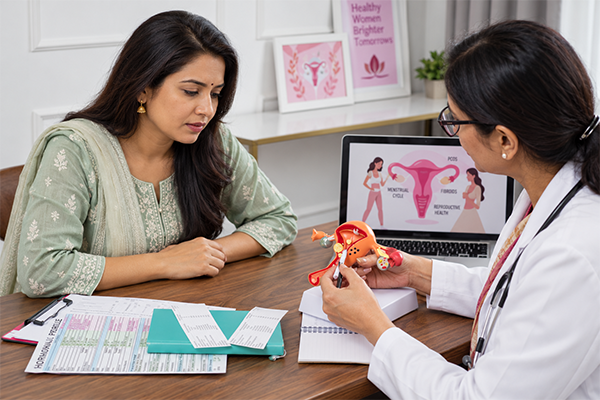
Hysteroscopy Explained: Procedure, Benefits & Recovery Time
If you have been advised to undergo hysteroscopy, you may have questions about what happens during the procedure and how quickly you can return to your routine.
Hysteroscopy lets a doctor examine the inside of the uterus using a thin, telescope-like instrument called a hysteroscope. In selected cases, it does more than look; it can diagnose or treat polyps, fibroids, adhesions, or retrieve an intrauterine device whose threads have gone missing.
Searching for the best women hospital for hysteroscopy rarely narrows things down the way people hope. What actually helps is understanding the procedure, the pain-management choices, the surgical expertise behind them, and what follow-up looks like once you're home.
When might hysteroscopy be recommended?
Your gynaecologist may suggest it when the uterine cavity needs a closer look than a scan can give. Common reasons include:
Heavy or irregular menstrual bleeding
Bleeding between periods or after menopause
Suspected polyps or fibroids
Recurrent pregnancy loss or fertility-related concerns
Scar tissue or adhesions (sometimes called Asherman's syndrome)
A uterine septum affecting the shape of the cavity
Removal of an IUD when its threads can't be located
One genuine advantage: diagnosis and treatment can happen in the same sitting, a biopsy, or a polyp, or a suitable fibroid, removed there and then.
What happens during hysteroscopy?
The hysteroscope passes through the vagina and cervix into the uterus. Sterile saline gently expands the cavity so the lining shows up clearly on a screen, most are done inside an hour.
Where it happens, and how much it hurts, depends on why it's being done. Some run as outpatient procedures under local anaesthesia; others need a hospital setting and regional or general anaesthesia. The 2025 ACOG guidance now supports local injected anaesthesia for both diagnostic and operative hysteroscopy, where appropriate.
Raise any concerns about discomfort with your gynaecologist before the procedure, not during it, RCOG guidance is clear that patients should understand their pain-relief choices going in.
What are the benefits of minimally invasive gynae surgery?
Hysteroscopy is minimally invasive gynae surgery at its simplest, no abdominal incision, which is what makes it so well suited to conditions confined to the uterine cavity.
It's worth separating hysteroscopy from laparoscopic gynaecological surgery. Laparoscopy uses small abdominal incisions to reach the pelvis; hysteroscopy reaches the uterus through the vagina and cervix instead, no incisions at all.
At The Women's Hospital (TWH), patients needing broader gynaecological surgery can also access specialist care for fibroids and endometriosis, including laparoscopic approaches where clinically appropriate.
How long does hysteroscopy recovery take?
Recovery depends on what was done, a diagnostic look, a biopsy, or active treatment in the same visit.
Expect period-like cramps and light bleeding for a few days. Most people are back to normal activities that same day or the next; operative hysteroscopy or general anaesthesia can push that out a little.
Use sanitary pads rather than tampons while bleeding continues, and hold off on intercourse until it's cleared. Beyond that, follow your doctor's specific instructions.
Heavy bleeding, worsening pain, fever, or foul-smelling discharge afterwards aren't things to wait out; they can signal infection, so seek medical advice.
How do you choose the best women's hospital for hysteroscopy?
Look past the procedure itself. Does the team have real gynaecological experience, walk you through pain-management choices properly, and offer follow-up after treatment?
At TWH, hysteroscopic surgery sits within the expertise of Obstetrics & Gynaecology. The point isn't chasing a "best" label; it's finding an approach that fits your diagnosis and your needs.
FOR WOMEN. FOR LIFE.
Hysteroscopy can give your doctor a clear view of the uterus and, often, treat the problem in the same visit. If it's been recommended, ask why it's needed, what type of procedure is planned, your pain-management options, and what recovery will look like for you.
Considering hysteroscopy, or still weighing your options? Speak with a TWH gynaecology specialist about the approach that's right for you.
Most Popular this Month

Preconception Health: What Couples Should Check Before Trying for a Baby
Preconception Health: What Couples Should Check Before Trying for a Baby

The Complete Health Check-Up Checklist for Women by Age
The Complete Health Check-Up Checklist for Women by Age

Why Women Need Preventive Health Checkups, Even When They Feel Healthy
Why Women Need Preventive Health Checkups, Even When They Feel Healthy
Ovarian Cancer Treatment in Delhi: Symptoms, Diagnosis & Treatment Options Explained
Ovarian Cancer Treatment in Delhi: Symptoms, Diagnosis & Treatment Options Explained

