










C-Section Surgery Explained: Step-by-Step Delivery Guide
The path to motherhood looks different for everyone; for some, the journey comes via the operating theatre. When a C-section is booked weeks in advance or deemed the only option during labour, your mind can be flooded with feelings from pure excitement to natural fear. A C-section is not second-best; nor is it a loss, but rather a careful baby delivery operation.
The Step-by-Step Cesarean Delivery Procedure
It takes a precisely choreographed surgical team to perform the C-section. The team includes an obstetrician who will perform surgery along with a surgical assistant, an anesthesiologist, and a neonatal team on standby for the delivery.
Step 1- Preparation and Anaesthesia
Prior to entering the operating room, your abdominal area will be cleaned thoroughly. The skin on the belly area will be clipped to eliminate micro-cuts that can lead to a surgical-site infection. An intravenous (IV) catheter will be inserted into your arm to enable administration of fluids, and a urinary catheter (a very fine tube) will be placed into your bladder to ensure it remains empty throughout the operation and away from the area being operated on. The anesthesiologist will then administer regional anaesthesia, most commonly a spinal block. This type of anaesthesia will numb you from your chest down, allowing you to remain awake and aware throughout the delivery.
Step 2-The Surgical Incisions
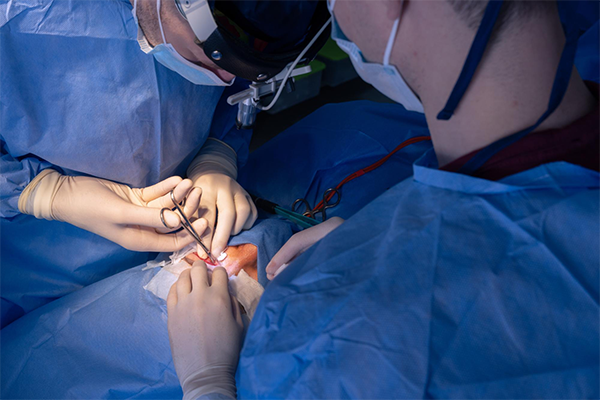
As the anaesthetic takes full effect, the obstetric surgeon will make a horizontal, low transverse incision across your abdomen, roughly 2 centimetres above the pelvic bone. Following the initial skin and subcutaneous fat incisions, your surgeon will move to the tough layer of tissue that covers your abdominal muscles, called fascia and make another horizontal incision. Rather than cut through the abdominal muscles themselves, the obstetrician will gently spread the muscles apart vertically at the midline to expose the abdominal cavity. Another horizontal incision will then be made in the lower part of your uterus, and once opened, your baby will be carefully extracted.
Step 3-The Closing
The entire baby extraction part of the surgery takes a matter of minutes, but 30-45 minutes of the remainder of the surgery is dedicated to the careful stitching together and re-assembly of your abdominal cavity.
The Medical Choice: Planned C-Section vs Emergency
As about 27.2% of deliveries in India are conducted through C-section, medical strategies of maternity management define this type of surgery into two paths: Planned Cesarean and emergency C-section.
Planned Cesarean: A planned Cesarean is a procedure scheduled long before labour has even started. Usually, the surgery takes place somewhere around 39 weeks into pregnancy, and this decision is made due to clinical circumstances such as placenta previa, breech presentation, multiple births, or if there was a classical uterine scar from earlier C-sections. Emergency C-Section: An emergency C-section is an unexpected detour during the actual labour process due to unforeseen clinical conditions that require intervention, such as failure of labour to progress. Maternal issues such as a spike in blood pressure, the baby not being able to tolerate contractions, or changes in the heartbeat pattern (fetal distress).
How to Manage Baby Delivery Operation Risks?
The first and foremost thing that we should do when dealing with any high-level surgery such as baby delivery is to be bold and direct to avoid any baby delivery operation risks in any way. The expectant mother should be informed about the real issues in advance to facilitate them taking the decision along with the doctors.
● Surgical Site Infections (SSIs): Infections that can take place in the tissues adjacent to the scar, or in the wall of the uterus, may occur at times. But such risks are significantly reduced by proper usage of antibiotics even before the surgery, in pre-operative methods.
● Blood loss & clots: It increases due to immobility post surgery and leads to Deep vein thrombosis (DVT).
● Anaesthetic rebound: Temporary backaches near the site, shivery feelings and post-spinal headaches are some side effects that might occur when spinal block starts to wane.
The Journey to Postoperative Healing
C-section recovery takes time; here are some C-section recovery tips that help in healing:
● Splint the scar: During any sort of chest strain like coughing, laughing, or sneezing, place a flat pillow against your lower abdomen, pressing it firmly into the wound site to take up muscle movement.
● Log-roll: Roll onto one side to lower your legs over the side of the bed, then push yourself into an upright sitting position using your arm and hand.
● Move deliberately: Taking short walks down the hall within 24 hours speeds circulation, gets digestion moving, and decreases your risk of blood clots.
● Pain Control: Remain compliant with any prescribed and breastfeeding-compatible medications by taking them as scheduled. This journey towards recovery is an impressive showcase of the enduring strength of women and the medical interventions to heal them. Preparing for a planned C-section or want to discuss your delivery options? Book a consultation with TWH's obstetrics and maternity team.
Most Popular this Month

IVF treatment in Delhi: Process, success rates & choosing the right specialist
IVF Treatment in Delhi: Process, Success Rates & Choosing the Right Specialist
Laparoscopic myomectomy: Fibroid removal surgery explained
Laparoscopic Myomectomy: Fibroid Removal Surgery Explained
Ovary surgery explained: Types, recovery & what to expect
Ovary Surgery Explained: Types, Recovery & What to Expect

Types of Pregnancy Delivery: Normal, C-Section & More
Normal, C-Section, Water Birth & More: Types of Pregnancy Delivery Methods Explained