









Heart Health in Women: Risk Factors, Warning Signs & Prevention
Heart disease doesn't wait for old age. Blood pressure, diabetes, cholesterol, smoking, a sedentary routine, stress, weight, all of it can start working against the heart decades before anyone thinks to check. Understanding heart health in women means factoring in things that don't usually make the list either: pregnancy complications, PCOS, menopause. Each one can quietly shift cardiovascular risk long before symptoms show up.
For Indian women specifically, this isn't a later-in-life issue. In 2025, the Union Health Ministry rolled out an intensified screening push aiming for full coverage of people aged 30 and above, targeting hypertension and diabetes among other things, two of the more stubborn cardiovascular risk factors around.
What Are the Heart Disease Risk Factors in Women?
Some heart disease risk factors in women are the ones everyone already half-knows: high blood pressure, high cholesterol, diabetes, obesity, smoking, inactivity, a poor diet. Family history matters too, as do chronic inflammatory conditions. The 2026 Indian Menopause Society guideline puts these down formally as established risk factors, not soft suggestions.
There's a second layer, though, tied to reproductive health specifically. PCOS, preeclampsia. Gestational diabetes. Pregnancy complications generally. Any of these can point to higher cardiovascular risk years, sometimes decades, later. So heart disease risk factors in women really need to be read across an entire health history, not just picked up during one adult checkup somewhere in her forties.
What Are the Warning Signs of Heart Disease in Women?
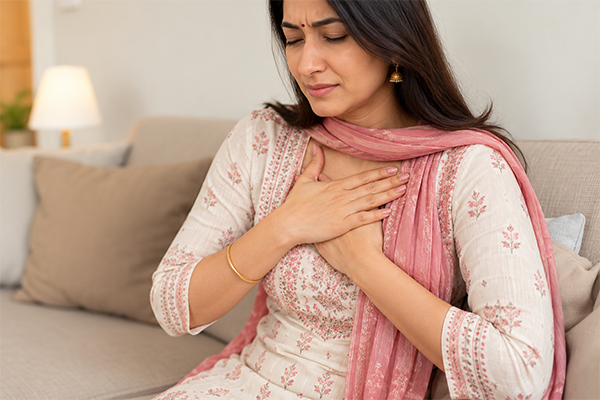
The warning signs of heart disease in women don't always announce themselves. Chest pressure still counts, obviously, but so does unusual fatigue, breathlessness, dizziness, nausea, indigestion, or pain that shows up in the jaw, neck, back, shoulders or arms instead of the chest at all.
Some heart attack symptoms in women are mild enough to shrug off. Others turn up with no chest pain whatsoever, build slowly, or hit while a person is simply resting. If something feels sudden, severe, unexplained, or several signs land together, don't sit on it hoping it passes. Get emergency care.
Recognising heart attack symptoms in women matters for a blunt reason: heart attacks are genuinely harder to spot in women. A 2025 Indian Express report noted that breathlessness, a racing heart, sweating and vague chest discomfort often get dismissed as anxiety first, sometimes at real cost.
How Does Menopause Affect Heart Health?
How menopause affects heart health is underdiscussed, given that cardiovascular risk climbs noticeably during the transition itself. Hormones shift. Metabolism shifts. Blood pressure, cholesterol, blood sugar, body-fat distribution, all of it moves. The Indian Menopause Society treats the menopause transition less as an endpoint and more as a checkpoint: a natural moment to reassess cardiovascular risk and act on it.
Understood properly, how menopause affects heart health becomes less alarming and more useful, a prompt to revisit lifestyle habits and actually talk to a doctor about risk, instead of letting the transition pass without a second thought.
How Can Women Protect Their Heart?
Protecting heart health in women doesn't require anything dramatic. Don't smoke. Stay active. Eat reasonably well. Keep weight, blood pressure, cholesterol and blood sugar in a manageable range. Sleep matters here too, and so does long-term stress; both get dropped first when life gets busy, which is usually the wrong call.
Preventive care is what catches most of this early, before it becomes something harder to reverse. A women's heart health checkup typically covers blood pressure, weight, cholesterol, blood sugar and family history, with more tests added depending on age and personal risk.
A women's heart health checkup isn't meant to be a fixed package handed to everyone the same way. Reproductive history, menopause status, existing conditions, day-to-day habits, each one changes what actually needs looking at.
FOR WOMEN. FOR LIFE.
If you want to understand your cardiovascular risk and plan the right preventive care, speak with the TWH team for personalised guidance based on your age, health history, lifestyle and individual needs.
Most Popular this Month

Why Does Sex Hurt in the First Months of Marriage? Common Causes and When to Talk to a Gynaecologist
Why Does Sex Hurt in the First Months of Marriage? Common Causes...

Vagina Surgery Types Explained: Prolapse Repair, Leakage Surgery, and Vaginoplasty, and How Doctors Decide Which One You Need
Vagina Surgery Types Explained: Prolapse Repair, Leakage Surgery, and Vaginoplasty, and How...

Neonatologist or Paediatrician: Which Doctor Does Your Newborn Need, and When Does That Change?
Neonatologist or Paediatrician: Which Doctor Does Your Newborn Need, and When Does...

Gestational Diabetes in Indian Pregnancies: When the Sugar Test Is Done and What a High Result Means for You and Your Baby
Gestational Diabetes in Indian Pregnancies: When the Sugar Test Is Done and...